Vitality Catalyst · Church Revitalization Coach

Tag: giving

  • What John Newton Taught Me About Money (Spoiler: He Gave It Away)

    What John Newton Taught Me About Money (Spoiler: He Gave It Away)

    What John Newton Taught Me About Money (Spoiler: He Gave It Away)

    How a slave trader’s transformation reveals the secret to generous living

    “Amazing grace, how sweet the sound, that saved a wretch like me…”

    You’ve probably sung those words a many times. But have you ever wondered about the man who wrote them? More specifically, have you ever wondered how John Newton handled money after his dramatic conversion?

    The answer might surprise you, and it definitely changed how I think about stewardship.

    The Wretch in Question

    John Newton wasn’t just any sinner. He was a slave trader who profited from human misery on an industrial scale. For years, he transported kidnapped Africans across the Atlantic, viewing them not as human beings but as cargo.

    Newton was driven by one thing: profit.

    He accumulated significant wealth through one of the most horrific industries in human history. By any measure, Newton was financially successful.

    He was also spiritually bankrupt.

    The Storm That Changed Everything

    On March 10, 1748, Newton’s ship encountered a violent storm that nearly destroyed it. Facing death, something broke in Newton’s heart. He cried out to God, perhaps for the first time in his life.

    That storm didn’t immediately transform Newton (his full conversion took years), but it began a process that would revolutionize not just his soul, but his relationship with money.

    The Grace Discovery

    After his conversion, Newton made a discovery that changed everything about how he handled money:

    “I am not what I ought to be, I am not what I want to be, I am not what I hope to be in another world; but still I am not what I once used to be.”

    Newton understood that everything in his life—including his financial resources—was a gift of undeserved grace.

    This wasn’t just theological theory for Newton. It was a personal reality. He had been saved from a life of evil and given a new purpose. How could he respond with anything less than radical generosity?

    The Great Giveaway

    Here’s what Newton did with his money after his conversion:

    He gave most of it away.

    As a pastor, Newton could have lived comfortably. But he chose to support theological education, help the poor, and fund the movement to abolish slavery in England.

    When people asked him why he gave so much away, Newton would reference his amazement at grace:

    “If I ever reach heaven, I expect to find three wonders there: first, to meet some I had not thought to see there; second, to miss some I had expected to see there; and third, the greatest wonder of all—to find myself there.”

    Newton never got over the fact that he had been saved. And that wonder fueled his generosity.

    The Newton Principle

    From studying Newton’s life, I’ve discovered what I call the “Newton Principle”:

    Generous living isn’t about what God wants FROM you—it’s about what God wants FOR you.

    Newton didn’t give it because he had to. He gave it because he wanted to. Grace had transformed his heart so completely that keeping money for himself felt like hoarding treasure when there was a kingdom to build.

    This challenges everything our culture teaches about money:

    • Culture says: “You earned it, you deserve it.”
    • Newton said: “I deserved hell, but got heaven instead.”
    • Culture says: “Look out for number one.”
    • Newton said: “Christ looked out for me when I was His enemy.”
    • Culture says: “Money equals security.”
    • Newton said: “God is my security; money is just a tool.”

    What Newton Knew That We Don’t

    Newton understood something that most modern Christians miss: your money reveals your theology.

    Think about it:

    • If you believe God owns everything, you’ll give generously.
    • If you believe God will provide, you won’t hoard fearfully.
    • If you believe eternity matters more than time, you’ll invest accordingly.

    But if you believe (even subconsciously) that your security comes from your savings account, that your worth equals your wealth, and that this life is all there is, well, you’ll give like most Christians give.

    Less than 2% of their income.

    The Newton Challenge

    Newton’s example raises some uncomfortable questions:

    1. Does your giving reflect amazement at grace, or obligation to a rule?
    2. Are you more excited about your retirement account or your kingdom investment?
    3. If you lost everything tomorrow, would your identity be shaken?
    4. Does your money serve your agenda or God’s agenda?

    A Modern Application

    I’m not suggesting you have to give away 90% of your income like Newton did. But I am suggesting we ask ourselves Newton’s fundamental question:

    “If I’m saved by grace alone, shouldn’t that grace transform how I handle everything, including money?”

    For Newton, the answer was a resounding yes.

    He wrote “Amazing Grace” not just as a song, but as a lifestyle. Every dollar he gave away was a note in that song, a tangible expression of gratitude for undeserved mercy.

    The Newton Legacy

    Newton died in 1807 with little money in the bank. But his legacy includes:

    • The abolitionist movement he helped inspire
    • Countless pastors trained through ministries he supported
    • Churches planted using principles he taught about generous living
    • “Amazing Grace” sung by millions for over 200 years

    Newton chose eternal impact over temporal accumulation. And 200+ years later, his investment is still paying dividends.

    What About You?

    I’m currently researching these principles for a book I’m writing on biblical stewardship. Newton’s story is just one of many examples of Christians who discovered that generous living brings more joy than anxious accumulation.

    But here’s my question for you: What would change in your financial life if you truly believed that everything you have is a gift of grace?

    What if Newton was right, that generous living isn’t about what God wants from you, but what God wants for you?

    The Amazing Grace Challenge

    This week, I challenge you to sing “Amazing Grace” with Newton’s story in mind. Remember that the man who wrote those words gave away most of his money because he couldn’t get over the fact that he had been saved.

    Then ask yourself: Does my giving reflect that same amazement at grace?

    Because if Newton taught me anything, it’s this: When you truly understand grace, generosity becomes inevitable.

    What do you think about Newton’s approach to money? Does his story challenge or encourage you? I’d love to hear your thoughts in the comments.

    P.S. If you’re interested in learning more about how historical Christians handled money and stewardship, make sure to subscribe to my newsletter. I’m working on a comprehensive resource that I think you’ll find transformative.

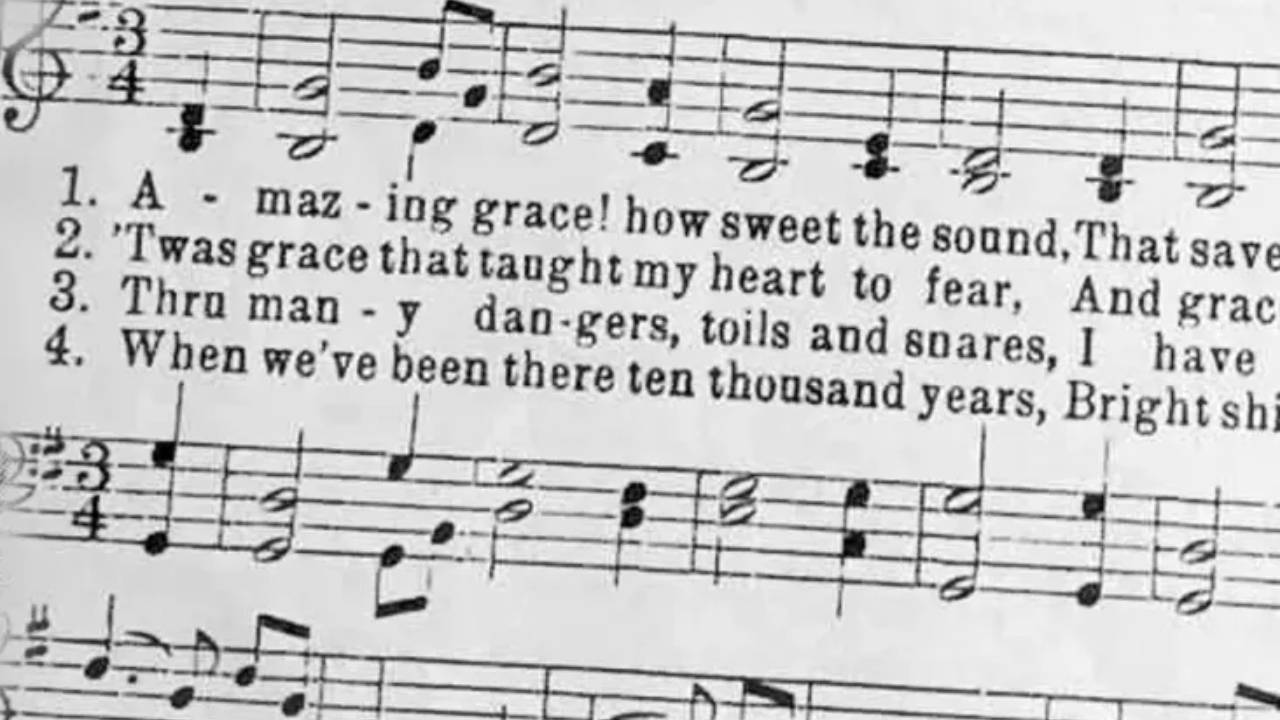
    Photo: Hymnal


    Originally published on the Church Vitality Network.

  • Why 78% of Christians Give Less Than 2% (And What We Can Do About It)

    Why 78% of Christians Give Less Than 2% (And What We Can Do About It)

    Why 78% of Christians Give Less Than 2% (And What We Can Do About It)

    The shocking disconnect between Sunday faith and Monday finances

    Last week, I was reviewing giving statistics from various Christian research organizations, and I came across a number that stopped me cold:

    78% of Christians give less than 2% of their income to their church.

    Let that sink in for a moment.

    We’re talking about people who claim to follow Jesus Christ, the One who gave His life for them, and yet the vast majority give less than the cost of a monthly Netflix subscription to advance His kingdom.

    But before we start throwing stones, let me ask you an honest question: Why do you think this is happening?

    The Uncomfortable Truth

    After twenty years in ministry and countless conversations about money and faith, I’ve discovered that this isn’t primarily a heart problem; it’s an education problem.

    Most Christians have simply never been taught what the Bible actually says about money.

    Think about it: Jesus talked about money more than heaven and hell combined. He told 38 parables, and 16 of them were about possessions and stewardship. Yet when was the last time you heard a comprehensive sermon series on biblical stewardship?

    When was the last time someone taught you how to be generous instead of just telling you that you should be generous?

    The Four Root Causes

    Through my research, I’ve identified four primary reasons for this giving gap:

    1. Biblical Illiteracy About Money

    Most Christians can quote John 3:16, but they’ve never heard of Luke 12:21: “So is he that lays up treasure for himself, and is not rich toward God.”

    We know the salvation verses but not the stewardship verses.

    2. Church Hurt and Suspicion

    Let’s be honest, scandals involving televangelists and prosperity preachers have made many Christians suspicious of anyone talking about money from the pulpit.

    I get it. I’ve seen the damage done by leaders who twist Scripture for financial gain.

    3. Cultural Conditioning

    We live in a culture that screams “It’s YOUR money!” from every corner. The idea that we might be stewards rather than owners feels foreign, even offensive.

    4. Lack of Practical Framework

    Even Christians who want to be generous often don’t know where to start. How much should I give? To what? When? Why?

    Without a biblical framework, we default to emotional giving or no giving at all.

    What John Newton Discovered

    Here’s what gives me hope: some of history’s greatest Christians faced these same struggles and found a way through.

    Take John Newton, the former slave trader who wrote “Amazing Grace.” Before his conversion, Newton was driven by one thing: profit. He accumulated wealth through one of the most horrific industries in human history.

    But after his dramatic conversion, Newton made a discovery that changed everything:

    Generous living isn’t about what God wants FROM you, it’s about what God wants FOR you.

    Newton began giving away most of his income. He supported theological education, helped the poor, and played a key role in the movement to abolish slavery in England.

    When people asked him why he gave so much away, Newton would say: “If I ever reach heaven, I expect to find three wonders there: first, to meet some I had not thought to see there; second, to miss some I had expected to see there; and third, the greatest wonder of all, to find myself there.”

    Newton understood that everything he had was a gift of grace. Generous giving wasn’t a burden; it was a joyful response to overwhelming mercy.

    The Path Forward

    So, what can we do about this 78% problem?

    First, we need to start with the Gospel, not guilt. Generous giving must flow from gratitude for what Christ has done for us, not from manipulation or obligation.

    Second, we need biblical education. Christians need to understand what Scripture teaches about money, stewardship, and the local church.

    Third, we need practical frameworks. It’s not enough to say “be generous.” We need to teach people how to move from financial anxiety to kingdom confidence.

    Fourth, we need to address the hurt. Many Christians have been wounded by churches or leaders who mishandled money. Healing must happen before healthy giving can occur.

    A Personal Challenge

    I’m currently working on a comprehensive resource to address these issues—a 28-day journey through biblical stewardship that I believe could help close this giving gap.

    But in the meantime, let me challenge you with this: What if the reason you’re not experiencing the joy of generous living isn’t because you don’t have enough money, but because no one has ever taught you how to think about money the way God thinks about it?

    What if there’s a better way?

    Questions for Reflection

    1. Do you fall into the 78% or the 22%? Be honest.
    2. What’s your biggest obstacle to generous giving?
    3. Have you ever been taught a biblical framework for stewardship?
    4. What would change if you truly believed that everything you have belongs to God?

    What’s Next?

    Over the next few weeks, I’ll be sharing more insights from my research into biblical stewardship. If you found this post helpful, I’d encourage you to subscribe to my newsletter for updates on this project.

    Because here’s what I believe: If we can solve the stewardship problem, we can transform the church. And if we can transform the church, we can change the world.

    The question is: Are you ready to be part of the solution?


    What do you think? Have you noticed this giving gap in your own church or life? I’d love to hear your thoughts in the comments below.

    Photo


    Originally published on the Church Vitality Network.

  • 4 Steps to Revitalize Giving in a “Cash-Strapped” Church

    4 Steps to Revitalize Giving in a “Cash-Strapped” Church

    Many churches struggle to make ends meet in today’s challenging economic climate. According to Vanco Research, The average giving amount per churchgoer is $17 per week (Health Research Funding). That’s $73.67 a month per giver. That’s $884 a year per giver.

    U.S. Christians collectively make $5.2 trillion annually — nearly half the world’s total Christian income (Health Research Funding). If your congregation is facing financial difficulties, you’re not alone. The good news is that you can inspire your members to give generously and help put your church on solid financial footing with the right approach. Here are four proven steps to engage people and encourage giving through your local church.

    Step 1: Cultivate a Culture of Generosity

    The foundation of a financially healthy church is a congregation that understands and embraces the biblical principle of generosity. This isn’t about guilt-tripping or pressuring people to give; it’s about fostering an environment where giving is seen as a joyful act of worship and a natural expression of faith.

    Start by incorporating teachings on stewardship and generosity into your regular sermons and Bible studies. You teach it from kids to adults. Use scripture to illustrate God’s heart for generosity and how it aligns with His character. Passages like 2 Corinthians 9:6-7 or Malachi 3:10 can be powerful starting points for these discussions.

    Next, share stories that demonstrate the impact of giving. Has a family in need been helped through the church’s benevolence fund? Has the youth group been able to go on a life-changing mission trip because of the congregation’s generosity? These real-life examples help people see that their contributions make a tangible difference.

    Remember to celebrate acts of generosity, both big and small. This could be as simple as a thankful mention during announcements or a feature in the church newsletter. People are more likely to participate when they see generosity being recognized and appreciated. 

    Lastly, remember that leadership sets the tone. Ensure that your pastoral staff and church leaders are visibly committed to giving. When leaders are transparent about their own generosity, it inspires others to follow suit.

    Step 2: Implement Transparent Financial Communication

     Trust is crucial when it comes to church finances. People are more likely to give when they understand where their money is going and how it’s being used to further the church’s mission 

    Start by providing regular financial updates to the congregation. This could be a monthly report in the bulletin, a quarterly presentation during a church service, or even a dedicated financial town hall meeting. Be clear about the church’s financial needs and goals. If you’re trying to raise funds for a specific project or to meet a particular budget shortfall, communicate that clearly.

    Take the time to explain how donations are used to support various ministries and outreach efforts. Break down the budget into understandable categories and show how each dollar contributes to the church’s overall mission. This helps donors see the direct impact of their giving.

    If your church is facing financial challenges, be open about it. Invite the congregation into the problem-solving process. You might be surprised at the creative solutions that emerge when you tap into your members’ collective wisdom and experience.

    Step 3: Diversify Giving Methods

    In our increasingly digital world, it’s crucial to offer a variety of giving methods to accommodate different preferences and habits. The easier you make it for people to give, the more likely they are to do so regularly.

    Start by setting up online and mobile giving options if you haven’t already. Many people, especially younger generations, rarely carry cash or checkbooks. They’re much more likely to give if they can do so with a few taps on their smartphone.

    Consider implementing a text-to-give system, which allows people to donate by simply sending a text message. This can be particularly effective for spontaneous giving moments during services or events.

    Don’t forget about automatic recurring donations. Many people find it easier to budget for giving when it’s set up as a regular, automatic transaction. Provide clear instructions on how to set this up and emphasize the convenience and consistency it offers.

    While embracing digital options, remember that some members may still prefer traditional methods. Continue to offer giving envelopes and have a physical donation box or basket available during services.

    Step 4: Launch a Focused Giving Campaign

    Sometimes, a specific campaign can energize your congregation and inspire increased giving. Start by setting a clear, achievable fundraising goal. This could be tied to a particular project, like a building renovation, or to a broader vision, like expanding your community outreach programs.

    Create a compelling narrative around your campaign. Give it a catchy name that encapsulates its purpose, like “Building for the Future” or “Expanding Our Community Impact.” Use this narrative consistently in your communications about the campaign.

    Visual aids can be powerful motivators. Consider creating a thermometer-style chart to track progress towards your goal and display it prominently in your church. Update it regularly to maintain excitement and momentum.

    Encourage pledges or commitments for regular giving as part of the campaign. This can help create a sustainable increase in donations beyond the initial push.

    If possible, set up a matching gift challenge. This could involve a generous donor (or group of donors) agreeing to match donations up to a certain amount. The prospect of doubling their impact can be a strong motivator for many givers.

    Remember, successful fundraising in a church context is about more than just asking for money. It’s about inspiring people to participate in God’s work through their resources. Always tie giving to the broader vision and impact of the church in people’s lives and in the community.

    By implementing these four easy steps – cultivating generosity, communicating transparently, diversifying giving methods, and launching focused campaigns – you can create a culture of joyful giving in your church. Even in challenging financial times, you can empower your congregation to support the church’s mission and experience the blessings of generosity.


    Source: https://www.vancopayments.com/egiving/asset-church-giving-statistics-tithing

    Photo: Fabian Bank

    Originally published on the Church Vitality Network.